
Waterproofing Technologies
Waterproofing represents the most underestimated yet critical component of any construction project. Despite typically accounting for only 2-5% of total construction costs, waterproofing failures can generate repair expenses 10-20 times the initial investment. The invisible nature of water intrusion—damage accumulating silently behind walls, beneath floors, and within structural elements—transforms minor deficiencies into catastrophic problems before anyone notices.
During my 12 years specializing in waterproofing systems for commercial and residential projects, I’ve witnessed luxury buildings with million-dollar finishes ruined by poorly executed waterproofing costing a fraction of that amount. The most dramatic case involved a residential tower in Valencia where roof infiltration caused €800,000 in damages over just two years—all because the developer saved €15,000 on a quality membrane system. This pattern repeats across the industry: short-term cost savings on waterproofing generate long-term financial disasters.
Modern waterproofing technology has evolved dramatically beyond traditional tar and felt applications. Nanotechnology-based coatings penetrate concrete at molecular levels, self-healing systems autonomously repair minor breaches, and IoT sensors provide early warning before water causes visible damage. These innovations aren’t just technical improvements—they fundamentally change the economics and reliability of moisture protection, offering performance levels unimaginable a decade ago.
Understanding waterproofing requires recognizing that water is relentless and finds any weakness in building envelopes. Hydrostatic pressure pushes water through microscopic cracks, thermal cycling creates openings, and improper installation creates pathways regardless of material quality. Effective waterproofing combines appropriate material selection, proper application, adequate drainage, and ongoing monitoring to create comprehensive protection systems rather than relying on single-product solutions.
Introduction: The Critical Role of Waterproofing
Water intrusion is among the most destructive forces affecting buildings. Moisture degrades materials, compromises structural integrity, enables mold growth that threatens health, damages finishes and contents, and creates conditions for wood rot and steel corrosion. The consequences extend beyond immediate repair costs to include business interruption, liability claims, decreased property values, and potential building code violations.
Waterproofing failure patterns reveal systemic industry problems. Most failures result not from material deficiencies but from design flaws, installation errors, or inadequate quality control. Transitions between different materials, penetrations for mechanical systems, and movement joints represent common failure points where detailing complexity exceeds installer capabilities. The lowest-cost bidder mentality that dominates construction procurement often selects contractors with minimal waterproofing expertise, creating conditions for failure regardless of specified materials.
Prevention costs far less than remediation. A properly designed and installed waterproofing system might add 2-4% to construction costs, but addressing failures after occupancy often requires disruptive demolition, occupant relocation, multiple trades coordination, and business interruption that multiply direct repair costs by 5-10x. Insurance typically excludes gradual water damage, leaving owners fully responsible for repair expenses that can exceed original construction costs for affected areas.
Climate change intensifies waterproofing challenges. More frequent extreme precipitation events, shifting temperature patterns that accelerate material degradation, and rising water tables in coastal areas increase moisture loads beyond historical design assumptions. Buildings constructed with waterproofing systems designed for past climate conditions face heightened failure risks. Modern approaches must anticipate these changing conditions through more robust materials, improved drainage capacity, and monitoring systems that detect problems before they escalate.
The industry is experiencing a technological revolution that transforms waterproofing from passive barrier systems to active, intelligent moisture management. IoT-integrated moisture sensors now alert building managers to developing problems months before visible symptoms appear. In a recent 200-unit residential project, embedded sensors detected a micro-leak at an expansion joint three months before any visible signs emerged, preventing €40,000 in damage through early intervention. This shift from reactive repairs to predictive maintenance represents the future of building moisture protection.
Modern Waterproofing Methods
Contemporary waterproofing offers diverse material systems suitable for different applications, substrates, and performance requirements. Understanding each method’s characteristics, advantages, and limitations enables appropriate selection for specific conditions rather than defaulting to familiar approaches that may not optimize performance or cost.
Cementitious Waterproofing
Cementitious waterproofing uses cement-based compounds containing polymers and other additives that create moisture barriers when applied to concrete or masonry substrates. These systems bond chemically with substrate surfaces, forming integral protection rather than surface coatings that might delaminate. The rigid nature suits applications where substrate movement is minimal and where breathability is desirable.
Application involves mixing powder components with water to create slurries that are brushed, troweled, or sprayed onto prepared surfaces. Multiple coats build thickness gradually, with each layer curing before subsequent application. The ease of application makes cementitious systems accessible to general contractors without specialized equipment, though proper surface preparation and curing are critical for performance.
Advantages include excellent adhesion to concrete and masonry, resistance to hydrostatic pressure when properly applied, breathability that allows moisture vapor transmission, and compatibility with subsequent tile or stone finishes. The rigid nature provides mechanical strength and impact resistance. Cost is typically lower than membrane systems, and materials are widely available. Cementitious waterproofing works well for below-grade foundations, water tanks, sewage treatment plants, and tunnels where positive-side application is feasible.
Limitations arise from rigidity that cannot accommodate substrate movement. Cracks in underlying concrete transmit through cementitious coatings, creating water pathways. The system requires dry substrates for application and adequate curing time before water exposure. Performance depends heavily on application quality—inadequate thickness, improper mixing, or insufficient curing compromises protection. The breathable nature, while beneficial in some contexts, provides less absolute moisture barriers than impermeable membranes for applications requiring complete water exclusion.
Liquid Membrane Systems
Liquid-applied membranes create seamless, monolithic waterproofing barriers that conform to complex geometries and penetrations. These systems begin as liquids—typically acrylic, polyurethane, or silicone-based—that cure through solvent evaporation, chemical reaction, or moisture exposure to form flexible, elastic membranes. The liquid application eliminates seams that are common failure points in sheet membranes.
Installation involves applying liquid materials by brush, roller, or spray onto prepared substrates. Multiple coats build to specified thickness, typically 1-2mm for standard applications. Reinforcing fabrics can be embedded at transitions, corners, and stress points to enhance strength and crack-bridging capability. Curing times vary by chemistry—some systems cure within hours while others require days depending on temperature and humidity.
The seamless nature represents the primary advantage. No seams means no potential leak paths at overlaps. Liquid membranes easily accommodate complex details—pipes, drains, corners, changes in plane—that challenge sheet membranes. The flexibility allows bridging substrate cracks up to several millimeters depending on formulation. Many systems offer excellent UV resistance for exposed applications and can receive direct finishes without protection boards. Application doesn’t require specialized equipment beyond standard painting tools.
Challenges include thickness control, as variations in application rate create inconsistent protection. Weather sensitivity during application and curing restricts installation windows. Quality depends heavily on applicator skill and site supervision. Some systems are sensitive to substrate moisture content or require primers. Cold weather or high humidity can extend curing times, delaying subsequent trades. Material costs typically exceed cementitious systems though installed costs may be competitive when accounting for details complexity.
Bituminous Coating
Bituminous waterproofing employs asphalt or coal tar-based materials applied as hot melts, cold applied mastics, or solvent-based coatings. These systems have protected structures for over a century, with proven long-term performance in diverse conditions. Modern bituminous products incorporate polymers and synthetic modifiers that improve flexibility, temperature performance, and adhesion compared to traditional tar applications.
Hot-applied systems involve heating bitumen to liquid consistency and spreading onto substrates where it cools to form tough, durable membranes. Cold-applied mastics or emulsions eliminate heating requirements but typically require multiple coats to achieve adequate thickness. Self-adhesive modified bitumen sheets combine membrane flexibility with simplified installation that doesn’t require torches or hot materials on site.
Durability and cost-effectiveness are primary advantages. Bituminous waterproofing withstands continuous water immersion, resists most chemicals, and provides excellent resistance to root penetration for green roof applications. The self-healing properties of bitumen enable minor punctures to seal under pressure and temperature. Installed costs are moderate, and materials are readily available globally. Track records spanning decades demonstrate reliable long-term performance when properly applied.
Limitations include UV sensitivity requiring protection from sunlight exposure, temperature sensitivity where extreme heat causes flow and extreme cold causes brittleness, and installation challenges where hot application creates safety hazards and odor concerns. Environmental regulations increasingly restrict solvent-based formulations. The black appearance limits architectural applications. Adhesion to some substrates requires primers or special preparations. Quality control is critical as application temperature, thickness, and overlap details strongly influence performance.
Polyurethane Liquid Membrane
Polyurethane liquid membranes represent advanced technology offering exceptional flexibility, durability, and weather resistance. These two-component systems combine polyol resins with isocyanate hardeners that chemically react to form tough, elastic membranes. The resulting material exhibits outstanding elongation—often exceeding 300%—enabling superior crack-bridging performance and accommodation of substrate movement.
Application requires mixing components immediately before use and applying by roller, brush, or spray to achieve specified thickness, typically 1.5-3mm depending on performance requirements. The mixed material has limited pot life, requiring efficient application to avoid waste. Curing occurs through chemical reaction rather than solvent evaporation, enabling application in humid conditions and achieving full strength relatively quickly—often 24-48 hours.
Performance advantages are substantial. Polyurethane membranes resist UV degradation, maintain flexibility across temperature extremes from -40°C to +90°C, and exhibit excellent chemical resistance. The seamless application eliminates leak-prone seams while accommodating complex geometries. High tensile strength and tear resistance provide durability against mechanical damage. The membrane bonds strongly to diverse substrates including concrete, metal, wood, and existing waterproofing. Service life typically exceeds 20-25 years with minimal maintenance.
Cost represents the primary limitation—polyurethane systems typically cost 50-100% more than basic liquid membranes, though lifecycle cost analysis often favors polyurethane due to extended service life and superior performance. Installation requires trained applicators familiar with proper mixing, application rates, and safety precautions as isocyanates pose health hazards without proper protection. Material is sensitive to moisture during mixing and initial cure, requiring dry conditions. Aesthetic finish may show application marks unless final coats are carefully applied or subsequent coverings are used.
Advanced Waterproofing Technologies
Emerging technologies are transforming waterproofing from passive moisture barriers to intelligent, adaptive systems that provide superior protection, longer service life, and proactive failure prevention. These innovations leverage nanotechnology, autonomous healing mechanisms, and digital monitoring to deliver performance levels impossible with conventional approaches.
Nanotechnology-Based Coatings
Nanotechnology waterproofing employs materials engineered at molecular scales to create ultra-effective moisture barriers. Nano-sized particles—typically silica or silane compounds—penetrate deeply into concrete pores and chemically bond to cement crystals, creating hydrophobic zones that repel water while allowing vapor transmission. This molecular-level protection differs fundamentally from surface coatings that can delaminate or wear away.
The nano-hybrid hydrophobic coatings we now apply penetrate up to 20mm into concrete, creating molecular-level impermeable barriers lasting 15+ years versus 5-7 years for traditional surface treatments. The initial cost runs approximately 40% higher than conventional waterproofing, but the ROI is compelling when accounting for extended service life, superior performance, and reduced maintenance requirements.
Application involves spraying or brushing nano-particle suspensions onto clean, dry substrates. The tiny particles migrate into pores through capillary action and chemical affinity. Once in place, chemical reactions bond particles to substrate minerals, creating permanent hydrophobic zones. The process requires no mixing, curing is rapid, and treated surfaces maintain natural appearance unlike film-forming coatings.
Benefits include deep penetration protection that withstands surface abrasion, breathability maintaining vapor permeability while blocking liquid water, resistance to UV degradation and aggressive chemicals, and non-toxic formulations safe for drinking water applications. The invisible finish preserves aesthetic appearance while providing protection. Retreatment is simple—additional applications refresh surface layers without removing existing material. The technology suits historic preservation where visible waterproofing systems would alter appearance.
Limitations involve substrate requirements—nano-coatings work best on concrete and masonry but provide limited protection on metals or plastics. The deep penetration requires porous substrates and adequate moisture content for particle migration. Surface contaminants block penetration, demanding thorough cleaning. Cost exceeds conventional systems, though lifecycle analysis increasingly favors nano-technology. The relatively new technology lacks decades-long performance data available for established systems, though accelerated aging tests project excellent durability.
Self-Healing Waterproofing Systems
Self-healing waterproofing incorporates materials that autonomously repair minor damage, dramatically extending service life and reducing maintenance requirements. Multiple mechanisms enable self-healing: encapsulated healing agents release when cracks form, shape-memory polymers close gaps under heat exposure, and bacterial systems produce calcite that fills voids. These systems transform waterproofing from static barriers that degrade over time to dynamic materials that maintain integrity despite minor damage.
Capsule-based systems embed microcapsules containing healing agents—typically polyurethane or epoxy resins—throughout waterproofing membranes. When cracks breach capsules, internal pressure releases healing agents that flow into voids and polymerize, sealing damage. The mechanism operates autonomously without external intervention, continuing throughout the material’s life as long as unbroken capsules remain near damage sites.
Crystalline self-healing concrete additives represent another approach gaining commercial traction. Proprietary chemical compounds remain dormant in dry concrete but activate when moisture enters through cracks. The chemicals react with water and cement compounds to grow crystals that progressively fill cracks up to 0.4mm wide. The process continues as long as moisture is present, even healing cracks that develop years after construction. Multiple products are now commercially available with proven track records in tunnels, basements, and water infrastructure.
Performance advantages include extended service life through continuous self-repair, reduced maintenance costs by eliminating minor repairs, and improved reliability as the system compensates for installation imperfections or minor substrate movement. Self-healing enables thinner initial applications since the material can repair normal wear rather than requiring excess thickness to accommodate degradation. Environmental benefits accrue from extended service life and reduced repair material consumption.
Challenges include higher initial costs—typically 25-50% premiums over conventional systems—and healing limitations as damage exceeding design thresholds cannot be repaired. Healing rates vary from minutes to weeks depending on mechanism and environmental conditions, potentially allowing damage accumulation if repeated rapidly. Long-term performance data is still accumulating since commercial deployment is relatively recent. Some healing mechanisms have temperature or moisture requirements that may not be met in all conditions.
Smart Waterproofing with IoT Sensors
IoT-integrated moisture monitoring represents perhaps the most transformative waterproofing innovation: the shift from passive barriers to intelligent systems that detect failures before they cause damage. Wireless moisture sensors embedded beneath or within waterproofing membranes continuously monitor conditions and alert facility managers when moisture levels indicate membrane breaches or drainage problems. This early warning enables intervention during the minor leak stage rather than after extensive damage occurs.
Sensor networks typically consist of moisture-sensitive elements positioned at critical locations—membrane seams, penetrations, transitions, low points—connected wirelessly to gateways that aggregate data and provide alerts via cloud platforms or building management systems. Modern sensors are battery-powered with multi-year service life, eliminating wiring complexity that would be prohibitively expensive for extensive coverage. Data visualization dashboards show moisture patterns across entire buildings, enabling pattern recognition and predictive maintenance.
The economic case is compelling. In the 200-unit residential project referenced earlier, the sensor system detected a micro-leak three months before visible signs emerged, enabling targeted repair costing €2,000 rather than extensive remediation approaching €40,000. Similar patterns repeat across installations—early detection reduces repair costs by 90%+ compared to addressing problems after damage accumulates. Insurance companies are beginning to offer premium reductions for buildings with monitoring systems, recognizing reduced claim likelihood and severity.
Beyond early detection, continuous monitoring provides performance verification that traditional waterproofing lacks. Building owners know their waterproofing systems are functioning rather than hoping they are. Sensors detect drainage system failures before water reaches occupied spaces. Comparative data across multiple buildings enables benchmarking and identifies high-performing versus problematic waterproofing approaches. The data supports warranty claims by documenting installation quality and subsequent performance.
Implementation challenges include initial costs—sensor systems add $5-15 per monitored square meter to waterproofing costs—and ongoing monitoring subscription fees. Sensor placement requires planning during design rather than afterthought installation. Battery replacement or sensor failures require access, potentially necessitating waterproofing disturbance. Data management and alert response protocols must be established or systems generate ignored warnings. Despite these hurdles, smart waterproofing represents clear future direction as component costs decline and performance benefits become widely recognized.
Crystalline Waterproofing
Crystalline waterproofing technology employs chemical compounds that react with moisture and concrete components to grow insoluble crystals within concrete pores and capillaries. These crystals permanently block water pathways while allowing vapor transmission. Unlike surface coatings that can be damaged or wear away, crystalline waterproofing becomes integral to concrete structure and cannot delaminate.
The chemistry involves proprietary blends of portland cement, silica sand, and active chemicals. When applied to concrete surfaces or mixed into fresh concrete, the chemicals remain dormant until moisture presence triggers reactions. Water activates the compounds, which then react with calcium hydroxide and other cement hydration products to form needle-like crystals. These crystals grow through concrete pores, creating tortuous pathways that block liquid water while remaining permeable to water vapor.
Application methods include surface treatments on existing concrete, admixtures blended into fresh concrete during mixing, and dry-shake applications on freshly placed concrete. Surface treatments require saturating concrete with water before application to drive chemicals deep into the matrix. Multiple applications may be necessary for dense or aged concrete with limited porosity. Proper surface preparation—removing contaminants, opening pores through mechanical abrasion—significantly affects penetration depth and performance.
The self-sealing capability represents a key advantage. Crystalline-treated concrete autonomously seals cracks up to 0.4mm through renewed crystal growth when moisture enters through newly formed cracks. This mechanism continues throughout the concrete’s life, providing continuous protection against damage from settlement, thermal movement, or seismic activity. The vapor permeability prevents moisture accumulation within concrete that can cause freeze-thaw damage or corrosion of reinforcement.
Additional benefits include durability exceeding concrete lifespan—the crystals are as permanent as concrete itself—resistance to aggressive chemicals and hydrostatic pressure, and non-toxicity suitable for potable water applications. The system adds negligible weight and doesn’t alter concrete appearance. Cost is moderate compared to membrane systems while offering superior longevity.
Limitations include substrate requirements—crystalline waterproofing only works on concrete and cementitious materials, not masonry, metal, or wood. Effectiveness depends on concrete quality and adequate cement content. Surface applications require porous concrete for penetration; densified or sealed concrete resists treatment. The system doesn’t bridge substrate cracks exceeding 0.4mm, requiring crack repair before application. Performance verification is challenging since the protection is invisible within concrete structure.
Application Areas
Effective waterproofing requires approaches tailored to specific conditions, including exposure type, substrate characteristics, accessibility, performance requirements, and aesthetic considerations. Different building elements face distinct challenges demanding customized solutions rather than one-size-fits-all approaches.
Basement and Foundation Waterproofing
Below-grade waterproofing protects against hydrostatic pressure, soil moisture, and groundwater that create some of the most challenging conditions. The consequences of failure—flooded basements, structural damage, mold growth—justify comprehensive protection. Approaches differ between positive-side (exterior) application that keeps water out of structure and negative-side (interior) systems that manage water after it penetrates.
Positive-side waterproofing applied to foundation exteriors provides optimal protection by preventing water from entering concrete. Typical systems include drainage boards that relieve hydrostatic pressure, waterproofing membranes (sheet-applied or liquid), and protection boards that prevent membrane damage during backfilling. French drains at footings collect water for controlled removal. This comprehensive approach requires accessible exteriors during construction or expensive excavation for remedial application.
Negative-side systems address water from the interior when exterior access is impossible. Cementitious waterproofing, crystalline treatments, or epoxy injections seal cracks and block moisture transmission. Cavity drainage systems accept that some water will penetrate, providing drainage pathways and collection systems that channel water to sumps for removal. While less ideal than positive-side protection, well-designed negative-side systems successfully address many basement moisture problems.
Material selection depends on hydrostatic pressure levels, soil conditions, construction schedule, and budget. Sheet membranes (modified bitumen, EPDM, PVC) provide robust protection with proven track records. Liquid-applied membranes accommodate complex geometries and penetrations. Bentonite clay systems swell when wet to create impermeable barriers. Crystalline waterproofing permanently treats concrete. For critical applications or high water tables, redundant systems combining multiple approaches provide enhanced reliability.
Roof Waterproofing Solutions
Roofs face extreme exposure—UV radiation, temperature cycling, precipitation, wind, hail—making waterproofing particularly challenging. Flat or low-slope roofs require continuous waterproofing membranes since gravity drainage is minimal. Steep-slope roofs use overlapping shingles, tiles, or panels where gravity facilitates drainage. Roof waterproofing failures cause interior damage, disrupt occupancy, and accelerate deterioration of structural elements.
Single-ply membranes (TPO, PVC, EPDM) dominate modern low-slope commercial roofing. These flexible sheets are mechanically fastened, fully adhered, or loose-laid with ballast. Seams are heat-welded or adhesive-bonded to create monolithic membranes. White reflective membranes reduce cooling loads through solar reflection. Service life typically reaches 20-30 years with proper installation and maintenance.
Built-up roofing (BUR) layers multiple plies of reinforcing fabric with bitumen to create redundant protection. Though declining in popularity due to installation complexity and odor, BUR systems offer excellent puncture resistance and proven longevity—many 50+ year-old installations remain functional. Modified bitumen single-ply systems combine BUR reliability with simplified installation.
Liquid-applied roof coatings provide seamless protection suitable for complex geometries, repairs, or restoration. Silicone, acrylic, or polyurethane coatings applied by spray or roller create flexible, UV-resistant membranes. These systems excel for maintenance and life extension of existing roofs, often at costs 30-50% below replacement while adding 10-15 years of service life.
Green roof waterproofing must withstand root penetration, continuous moisture exposure, and challenges of verifying performance beneath soil and vegetation. Specialized root-resistant membranes, redundant drainage layers, and careful detailing at penetrations and perimeters provide protection. Leak detection becomes critical since accessing waterproofing beneath established vegetation is disruptive and expensive.
Balcony and Deck Systems
Balconies and decks face particularly demanding conditions: foot traffic, furniture loads, thermal cycling, and water exposure without the drainage advantages of sloped roofs. The desire for attractive finishes that hide waterproofing adds complexity. Failures manifest as interior water damage to spaces below, structural deterioration, and safety hazards from loose tiles or deteriorated substrates.
Under-tile waterproofing membranes applied before tile installation provide protection while remaining hidden. Liquid-applied membranes (polyurethane, modified acrylic) or sheet membranes with fleece surfaces for tile adhesion create moisture barriers. The systems must accommodate substrate movement, which often exceeds roof movement due to smaller thermal mass and greater exposure. Uncoupling membranes combine waterproofing with crack isolation to prevent substrate cracks from transmitting to tile.
Drainage is critical—standing water accelerates deterioration and indicates inadequate slope or blocked drains. Positive drainage to outlets, proper sloping (typically 1-2%), and drain maintenance prevent water accumulation. Drainage mats beneath waterproofing provide paths for any water that penetrates tile to reach drains rather than accumulating and creating hydrostatic pressure against membranes.
Detail design determines success or failure. Transitions to building walls, door thresholds, drainage outlets, penetrations for railings or lights, and perimeter edges concentrate stresses and create potential leak paths. Pre-formed corner pieces, reinforcing fabrics, and careful layering at transitions improve reliability. Many failures result from inadequate attention to details during design and installation despite adequate field membrane performance.
Balcony waterproofing economics justify quality materials and installation. Repair costs include accessing waterproofing through finished tile, repairing damaged substrate and structure, remediating interior water damage, and reinstalling finishes. These costs typically exceed 10-20x the incremental investment in robust initial waterproofing. Specifying proven systems and qualified installers prevents problems far more cost-effectively than addressing failures after occupancy.
Swimming Pools and Water Features
Pools and water features face continuous immersion, aggressive chemicals, and hydrostatic pressure in both directions—internal water pressure pushing outward and external groundwater pushing inward. Traditional approaches used concrete with waterproofing treatments, but modern systems employ more reliable and easier-to-repair technologies.
PVC or reinforced polyester liners provide proven pool waterproofing with excellent track records. Factory-fabricated liners sized to pool geometry are installed over prepared substrates and secured at perimeters. The visible waterproofing doubles as finish surface, eliminating separate waterproofing and finish layers. Liners accommodate minor substrate movement without damage and can be replaced when worn without rebuilding pools. Service life typically reaches 15-25 years depending on UV exposure and maintenance.
Liquid-applied waterproofing membranes (polyurethane, polyurea) create seamless barriers suitable for complex geometries or custom features. These systems are particularly valuable for water features with irregular shapes, integrated fountains, or artistic elements. The membranes can receive tile, stone, or decorative finishes over protection layers. Polyurea’s rapid cure enables fast project completion—entire pools can be waterproofed in days rather than weeks required for traditional methods.
Crystalline waterproofing treats concrete to make it inherently impermeable, eliminating separate membrane layers. This approach works well for large or complex pools where liner installation would be problematic. The concrete itself becomes the waterproof barrier, with finishes applied over structurally integral waterproofing. Limitations include inability to repair localized failures without concrete removal and vulnerability to structural cracks exceeding self-healing capability.
Detail coordination between pool shell, mechanical systems, drains, lights, and returns requires careful planning. Waterproofing must integrate with embedded fittings without creating leak paths. Expansion joints accommodate movement while maintaining water-tightness. Overflow edges, skimmers, and step details need robust waterproofing transitions. Testing after waterproofing completion but before finishes enables leak detection and repair when access is straightforward rather than after tile installation.
Material Innovation
Continuing material development produces waterproofing systems with improved performance, easier installation, extended service life, and enhanced sustainability. Understanding material characteristics enables appropriate selection for specific conditions rather than relying on familiar but potentially suboptimal choices.
EPDM Membranes
Ethylene Propylene Diene Monomer (EPDM) rubber membranes have protected roofs and below-grade structures for over 60 years with proven durability and reliability. The synthetic rubber remains flexible across temperature extremes from -45°C to +150°C, resists UV degradation and ozone exposure, and tolerates building movement without tearing. EPDM’s long track record provides confidence in performance projections.
Manufacturing produces sheets in widths up to 15 meters and lengths exceeding 60 meters, enabling large areas with minimal seams. Black or white surfaces accommodate different solar gain requirements. Thickness typically ranges from 1-2mm, with thicker membranes providing enhanced puncture resistance. Material cost is moderate, and installation doesn’t require specialized equipment, making EPDM cost-competitive with alternative single-ply membranes.
Installation methods include fully adhered (bonded to substrate with adhesives), mechanically fastened (secured with plates and fasteners at intervals), or ballasted (loose-laid and held by gravel or pavers). Seams are created through splice tape or liquid adhesives—heat welding isn’t possible with EPDM’s chemistry. Proper seam construction is critical as this represents the primary potential weakness. Skilled installation typically achieves seam strengths approaching base membrane strength.
Long-term performance is excellent. EPDM roofs commonly exceed 30-40 years of service with proper maintenance. The material resists most chemicals, doesn’t support combustion (though it’s not fireproof), and handles ponding water without degradation. Repairs are straightforward—damaged areas can be patched with additional EPDM and splice tape or liquid adhesives. The black surface absorbs solar heat, potentially increasing cooling loads compared to reflective membranes.
Limitations include vulnerability to puncture from sharp objects or foot traffic during maintenance, incompatibility with petroleum products that can cause swelling, and aesthetic limitations where the black rubber appearance is problematic. Seams represent potential weak points requiring quality control. The membrane doesn’t self-heal damage and requires active repairs to maintain water-tightness.
PVC and TPO Systems
Polyvinyl Chloride (PVC) and Thermoplastic Polyolefin (TPO) membranes represent the fastest-growing segment of commercial roofing, collectively exceeding EPDM in new installations. Both are thermoplastic—heat-weldable seams create monolithic assemblies with seam strength exceeding base membrane. White or light-colored surfaces reflect solar energy, reducing cooling loads by 10-30% compared to dark surfaces. The materials resist most chemicals, biological growth, and UV exposure.
PVC membranes have protected commercial roofs since the 1960s with proven longevity—many installations exceed 30-35 years. The material remains flexible in cold while resisting heat damage. Chemical resistance suits industrial environments or green roofs where fertilizers and soil organisms might attack other membranes. PVC welding technology is mature with reliable heat-welding equipment widely available. However, PVC contains plasticizers that can migrate over time, potentially causing shrinkage or loss of flexibility in some formulations.
TPO emerged in the 1990s as an alternative without PVC’s plasticizers. The formulation incorporates rubber for flexibility and polyethylene for heat-weldability. Early TPO experienced some formulation problems, but modern products demonstrate improved long-term performance with installations approaching 20+ years still functioning well. TPO costs typically run 10-20% below PVC while offering comparable performance for most applications.
Installation mirrors EPDM methods—fully adhered, mechanically fastened, or ballasted—with the addition of heat-welded seams. Hot air welding creates homogeneous seam bonds stronger than base membrane. Welding quality is verifiable through destructive testing of sample seams, providing quality assurance unavailable with adhesive-bonded systems. Both PVC and TPO can receive direct foot traffic, mechanical equipment, and pavers without protection boards in many applications.
The primary distinction between PVC and TPO involves chemical resistance—PVC provides superior resistance to oils, greases, and some industrial chemicals while TPO costs less and avoids concerns about plasticizer migration. For most commercial applications, either material provides excellent performance. Selection often depends on local availability, contractor familiarity, and specific project requirements rather than fundamental performance differences.
Hydrophobic vs Hydrophilic Systems
Understanding water interaction mechanisms illuminates why different waterproofing approaches suit different applications. Hydrophobic (water-repelling) systems prevent water contact through molecular properties that cause water to bead and run off. Hydrophilic (water-attracting) systems allow water contact but swell or react to block further penetration. Each approach offers advantages for specific conditions.
Hydrophobic waterproofing includes most membranes, coatings, and nano-technology treatments. These systems create surfaces or barriers with extremely low surface energy that water cannot wet. Droplets bead and flow away rather than spreading and penetrating. Hydrophobic protection works across wide humidity ranges and doesn’t require water presence to function. However, any breaches—punctures, seam failures, installation gaps—create leak paths since the system provides no inherent blocking mechanism once water bypasses the hydrophobic surface.
Hydrophilic waterproofing swells when wet to create physical barriers blocking further water intrusion. Bentonite clay systems, some crystalline treatments, and specialized swelling gaskets exemplify this approach. The waterproofing actually requires water presence to activate. Small gaps or punctures automatically seal as surrounding material swells to close openings. This self-sealing capability provides robustness against installation imperfections and minor damage.
Bentonite systems consist of clay material sandwiched between geotextile fabrics or bonded to membranes. When groundwater contacts bentonite, clay swells up to 15 times dry volume, creating an impermeable gel that blocks water migration. The system tolerates rough substrates, handles minor foundation movement, and self-seals around penetrations. However, bentonite requires constant moisture to maintain swelled state—if dried out completely, gaps can reopen until clay rehydrates.
Selection between hydrophobic and hydrophilic approaches depends on exposure conditions. Hydrophobic systems excel for above-grade applications where drying occurs between rain events and for negative-side basement waterproofing where external moisture must be blocked. Hydrophilic systems work well for positive-side below-grade applications where constant groundwater contact maintains swelled state and self-sealing capability provides insurance against construction imperfections. Many comprehensive waterproofing systems combine both approaches—hydrophobic membranes with hydrophilic waterstops or sealants at critical transitions.
Durability and Performance
Waterproofing longevity determines true lifecycle costs and affects maintenance planning, building operations, and long-term property value. Understanding performance factors enables realistic expectations and appropriate maintenance strategies rather than assuming «install and forget» performance that waterproofing marketing sometimes implies.
Material quality represents the foundation of durability. Premium materials with higher polymer contents, UV stabilizers, and quality manufacturing typically cost 20-40% more than commodity alternatives but often last twice as long. The economics clearly favor quality—a membrane costing $30/m² lasting 25 years costs $1.20/m²/year versus $20/m² lasting 10 years at $2.00/m²/year. Yet procurement processes often select lowest initial cost, creating guaranteed premature failures.
Installation quality equals or exceeds material quality in determining performance. The best materials improperly installed fail rapidly. Substrate preparation, proper adhesion, correct thickness, seamless transitions, and detail quality all critically affect results. Inadequately trained installers working under aggressive schedules on low-bid projects create conditions for failure regardless of specified materials. Waterproofing is not a place to compromise on contractor quality or schedule.
Environmental exposure affects degradation rates. UV radiation breaks molecular bonds in many polymers, requiring UV stabilization or protective coverings for exposed membranes. Thermal cycling causes expansion and contraction that fatigues materials and connections. Ponding water increases exposure duration and leaches plasticizers from some systems. Industrial environments with aggressive chemicals demand specialized materials. Design should account for actual exposure rather than assuming best-case conditions.
Maintenance significantly extends waterproofing service life. Periodic inspections identify minor problems before they escalate. Cleaning removes debris that can puncture membranes or block drains. Repairing small damaged areas prevents water from migrating laterally beneath membranes to create widespread problems. Vegetation control prevents root penetration. Yet maintenance is frequently neglected until failures occur, transforming preventive maintenance costs of hundreds into remedial repairs costing tens of thousands.
A critical lesson I’ve learned: more layers don’t equal better protection. I’ve encountered specifications calling for 6-7 layers of different products that proved incompatible, creating failure points through delamination. Less is more when systems are well-designed. A properly applied single-layer system outperforms poorly executed multi-layer assemblies. Compatibility between components is essential—some materials chemically attack others, creating failures where layers contact.
Cost Analysis and ROI
Waterproofing economics involve balancing initial investment against performance, longevity, and consequences of failure. Comprehensive analysis accounting for lifecycle costs, failure probabilities, and repair scenarios produces dramatically different conclusions than simple first-cost comparisons that dominate many procurement decisions.
Typical waterproofing costs vary by application and system type. Basement waterproofing ranges from $50-150/m² for comprehensive positive-side systems including excavation, membranes, drainage boards, and restoration. Roof waterproofing costs $20-80/m² depending on membrane type, substrate condition, and project complexity. Balcony and deck waterproofing runs $40-100/m² including substrate preparation and drainage systems. These costs represent 2-5% of total construction budgets but protect 100% of investment.
System cost comparisons must account for longevity. A $30/m² system lasting 25 years costs $1.20/m²/year versus $50/m² lasting 40 years at $1.25/m²/year. The systems provide nearly identical annual costs despite 67% difference in initial investment. When repair costs, disruption, and premature replacement are factored, premium systems often generate superior returns. However, this requires longer hold periods than many developers plan, creating economic misalignment where owners who pay premium costs don’t capture full benefits.
Failure cost analysis reveals true economic stakes. Repairing failed waterproofing requires accessing and removing finishes ($50-200/m²), remediating water damage to substrates and structure ($100-500/m²), addressing interior damage ($200-1000/m² depending on finishes and contents), installing new waterproofing ($40-120/m²), and restoring all finishes ($100-400/m²). Total repair costs of $500-2000/m² commonly exceed 10-20x initial waterproofing investment. The Valencia residential tower case where €15,000 savings on waterproofing generated €800,000 in damage costs within two years exemplifies this economic reality.
ROI for waterproofing quality and monitoring systems is compelling when accounting for risk reduction. Upgrading from commodity to premium waterproofing materials typically adds 20-40% to costs—perhaps €20,000 on a €50,000 waterproofing package. If this reduces failure probability from 15% to 3% over 20 years while failures average €200,000 in damages, the expected value improvement is (15%-3%) × €200,000 = €24,000, exceeding the premium cost. IoT monitoring adding €10,000 that detects problems early, reducing average damage from €200,000 to €20,000, generates expected value improvements far exceeding sensor costs.
Insurance considerations affect economics. Some insurers exclude gradual water damage or apply high deductibles that leave owners bearing substantial risk. Properties with comprehensive waterproofing and monitoring may qualify for reduced premiums or better coverage. The insurance industry increasingly recognizes that proactive moisture management reduces claim frequency and severity, creating financial incentives for quality waterproofing beyond direct loss prevention.
Installation Best Practices
Proper installation determines whether quality materials achieve designed performance or fail prematurely. Best practices span planning, substrate preparation, application techniques, quality control, and commissioning to create comprehensive approaches that maximize success probability.
Planning and design establish foundations for quality installation. Detailed specifications clearly communicate performance requirements, material standards, and installation procedures. Shop drawings for complex details enable coordination between waterproofing and related systems. Pre-installation meetings align expectations between owners, designers, contractors, and subcontractors. Mockups for critical or complex applications validate proposed approaches before full-scale work.
Substrate preparation critically affects adhesion and performance. Surfaces must be clean, dry, sound, and properly profiled to accept waterproofing. Oil, dust, laitance, and incompatible coatings prevent adhesion and must be removed through grinding, blasting, or chemical cleaning. Cracks, spalls, and surface defects require repair to prevent telegraphing through membranes. Moisture content must meet material requirements—most systems demand dry substrates despite waterproofing wet environments once installed.
Application conditions affect material performance. Temperature and humidity must remain within manufacturer specifications during application and curing. Rain during installation compromises adhesion and can trap moisture beneath membranes. Wind can blow debris into wet materials or disrupt spray applications. Adequate lighting enables quality control. Rushing installation to meet schedules in poor conditions virtually guarantees problems. Project scheduling must accommodate realistic weather windows rather than assuming ideal conditions.
Detail execution determines system integrity. Transitions between materials, changes in plane, penetrations, and terminations concentrate stress and create potential leak paths. Pre-formed components, reinforcing layers, proper lapping sequences, and adequate termination anchorage all contribute to robust details. Many failures occur at details despite adequate field membrane performance. Photographs documenting detail execution provide valuable records for warranty claims or future repairs.
Quality control during installation catches problems when correction is straightforward rather than after finishes conceal waterproofing. Independent inspections verify substrate preparation, material thickness, seam quality, and detail execution. Destructive testing of seam samples validates welding or adhesive quality. Flood testing of critical areas proves water-tightness before subsequent work. While quality control adds costs, the expense is trivial compared to repair costs when problems aren’t detected until after occupancy.
Maintenance and Inspection
Proactive maintenance extends waterproofing service life and prevents minor issues from escalating into expensive failures. Systematic inspection programs, prompt repairs, and performance monitoring enable buildings to achieve or exceed designed waterproofing performance throughout their operational lives.
Inspection frequency depends on exposure and criticality. Roofs should be inspected semi-annually—spring and fall—to assess winter and summer impacts. Below-grade waterproofing receives less frequent inspection absent moisture indicators but should be evaluated during renovations or when adjacent excavation occurs. Balconies and decks warrant annual inspection to catch deterioration before structural damage occurs. High-value or critical facilities may justify quarterly inspections and continuous moisture monitoring.
Inspection scope includes visual examination of exposed waterproofing, documentation of changes or damage, testing of drainage systems, and moisture surveys of adjacent spaces. Infrared thermography can detect concealed moisture by identifying temperature differences caused by evaporation. Invasive moisture probes verify suspected problems. Comprehensive inspections should be documented with photographs, findings reports, and recommended actions.
Preventive maintenance addresses issues before they cause failures. Cleaning removes debris that blocks drains or punctures membranes. Vegetation control prevents root penetration. Resealing joints and terminations maintains water-tightness. Repairing minor damage prevents water from migrating laterally to create widespread problems. The investment in preventive maintenance—typically $2-5/m²/year—is trivial compared to corrective repair costs when systems fail.
Performance monitoring through IoT sensors provides continuous oversight supplementing periodic inspections. Moisture alarms enable immediate response when conditions indicate leaks. Trend analysis identifies slowly developing problems like blocked drains or degrading membranes. Comparative performance data across multiple buildings or areas within facilities reveals high-risk locations deserving additional attention. The data supports warranty claims and helps optimize maintenance allocation.
Repairs must be compatible with existing systems and properly executed to restore protection. Patch materials should match existing membranes or be verified compatible. Proper surface preparation ensures adhesion. Extending patches beyond damaged areas provides overlap and stress distribution. Testing repaired areas validates water-tightness before they’re concealed. Quick response to identified problems minimizes secondary damage and reduces repair complexity and cost.
Sustainability Considerations
Sustainable waterproofing addresses material extraction impacts, manufacturing emissions, installation safety, service life, maintenance requirements, and end-of-life disposal. Comprehensive sustainability analysis considers entire lifecycles rather than isolated factors like recycled content that may not significantly affect overall environmental footprint.
Material selection affects environmental impact through extraction, processing, and manufacturing. Petroleum-based products—bitumen, PVC, TPO, polyurethane—derive from fossil resources with associated carbon footprints. Natural materials like bentonite clay have lower embodied energy but may require greater thickness or supplementary systems. Recycled-content membranes reduce virgin material consumption though manufacturing processes still generate emissions. No waterproofing material is environmentally neutral, requiring tradeoffs between performance and environmental considerations.
Service life strongly influences sustainability since longer-lasting materials require fewer replacements over building lifetimes. A membrane lasting 40 years requires half the material and installation energy of one requiring replacement every 20 years. Durability considerations should weigh heavily in material selection from sustainability perspectives. Premium materials with longer service lives often prove more sustainable despite higher initial embodied energy.
Installation impacts include volatile organic compound (VOC) emissions from solvent-based products, energy consumption for hot-applied materials, and waste generation from packaging and cutoffs. Low-VOC or zero-VOC formulations reduce air quality impacts. Cold-applied systems avoid energy for heating. Careful project planning minimizes waste through accurate material estimates and efficient installation. Some membrane systems generate minimal waste—large prefabricated sheets eliminate the numerous small pieces and cutoffs from field-fabricated assemblies.
Maintenance requirements affect sustainability through ongoing chemical use, energy consumption, and material inputs. Systems requiring frequent recoating or supplemental treatments have greater lifecycle environmental loads. Durable systems needing only periodic cleaning minimize ongoing impacts. Monitoring systems that enable predictive maintenance prevent emergency repairs requiring rush shipping and extended equipment operation.
End-of-life management varies by material. Thermoplastic membranes (PVC, TPO) can be recycled into new products though collection logistics and contamination often direct them to landfills. EPDM and modified bitumen rarely recycle, typically being landfilled or incinerated. Some systems can be left in place beneath replacement waterproofing, avoiding disposal but adding to building material mass. Design for disassembly—mechanically fastened systems, avoiding adhesives—facilitates material recovery though it’s rarely practiced.
Building performance impacts represent perhaps the most significant sustainability contribution. Effective waterproofing prevents premature material degradation, eliminates moisture damage requiring replacement, maintains insulation performance, and enables long building service lives. Failed waterproofing triggers cascading damage requiring material replacement with associated environmental costs. Reliable moisture protection fundamentally supports sustainable building operation.
Common Failures and How to Avoid Them
Understanding typical waterproofing failures and root causes enables proactive prevention rather than reactive repairs after damage occurs. Most failures follow predictable patterns resulting from design oversights, installation errors, or inadequate maintenance rather than inherent material deficiencies.
Inadequate drainage creates hydrostatic pressure that drives water through minor imperfections that would otherwise remain minor. Proper drainage design includes adequate slope (minimum 1-2% for roofs and decks), appropriately sized and positioned drains, overflow drains preventing catastrophic ponding, and drainage layers beneath membranes. Maintenance must keep drains clear—many failures result from blocked drains rather than membrane deficiencies. Designing for maintenance access enables periodic cleaning without damage to waterproofing.
Detail failures at transitions, penetrations, and terminations account for disproportionate leak incidents despite representing small surface areas. Insufficient overlap at membrane transitions, inadequate reinforcement at corners and changes in plane, improper sealing of penetrations, and inadequate anchorage at terminations create leak paths. Quality waterproofing systems warrant additional investment in pre-formed detail components, skilled labor for complex areas, and rigorous inspection of critical details.
Incompatible materials create chemical conflicts or differential movement that compromise waterproofing integrity. Delamination between incompatible layers, chemical attack of membranes by adhesives or sealants, and differential thermal expansion causing stress concentrations all result from inadequate compatibility analysis. Material manufacturers provide compatibility information, but designers must verify compatibility across all system components rather than assuming products from different manufacturers will coexist peacefully.
Substrate movement cracks rigid waterproofing systems or creates gaps at transitions. Building settlement, thermal expansion, seismic activity, and substrate shrinkage all generate movement that waterproofing must accommodate. Flexible materials, crack isolation membranes, properly designed expansion joints, and adequate anchorage details prevent movement-related failures. The waterproofing system must match expected substrate behavior—using rigid systems on moving substrates invites cracking.
Installation errors include inadequate surface preparation, insufficient material thickness, improper seam construction, skipped reinforcement at stress points, and poor workmanship in general. Many result from inadequate contractor expertise, rushed schedules, poor weather conditions, or lack of supervision. Specifying qualified contractors with waterproofing track records, allocating realistic schedule duration, staging work during appropriate seasons, and implementing quality control reduce installation-related failures.
Maintenance neglect allows minor issues to escalate into major failures. Blocked drains cause ponding, minor punctures allow water infiltration, vegetation roots penetrate membranes, and UV exposure degrades unprotected materials. Systematic inspection and preventive maintenance programs catch these issues when correction requires minor repairs rather than extensive remediation. The relatively small ongoing maintenance investment prevents disproportionate future repair costs.
Future Trends in Waterproofing
Waterproofing technology continues evolving through materials science, digital integration, and changing performance requirements driven by climate conditions and building use patterns. Understanding emerging trends enables specifying systems positioned to deliver long-term performance as conditions evolve.
Climate adaptation will drive waterproofing performance requirements. More intense precipitation events increase water loads, necessitating greater drainage capacity and more robust waterproofing. Rising temperatures accelerate material degradation, requiring enhanced UV stabilization and thermal cycling resistance. Coastal properties facing rising water tables need waterproofing designed for increased hydrostatic pressure. Systems designed for historical climate conditions may prove inadequate for future conditions.
Integration with building systems will deepen as waterproofing transitions from isolated barrier systems to coordinated moisture management. Drainage systems that handle typical precipitation while routing extreme events to secondary pathways, green roofs that absorb rainfall while providing backup waterproofing, and envelope systems that manage both water and thermal performance represent comprehensive approaches replacing single-function waterproofing.
Digital monitoring will become standard rather than optional for critical waterproofing applications. Sensor costs continue declining while capabilities improve—battery life extending to 10+ years, wireless range expanding, and data analytics becoming more sophisticated. Early detection preventing damage before it occurs provides compelling economic justification. Expect monitoring to migrate from premium to standard offerings as component costs reach commodity levels.
Performance verification through testing and commissioning will increase. Building owners want assurance that specified waterproofing was correctly installed and is functioning as designed. Flood testing, thermal imaging, tracer gas detection, and digital monitoring provide verification that was previously impossible or prohibitively expensive. The data supports warranty enforcement and provides baselines for performance tracking.
Sustainability requirements will intensify, demanding lower embodied carbon, longer service life, reduced maintenance, and end-of-life recyclability. Bio-based waterproofing materials, carbon-sequestering systems, and circular economy approaches where materials are recovered and reused rather than landfilled will gain market share. Lifecycle carbon accounting will influence material selection as building codes adopt embodied carbon limits.
Prefabrication and offsite manufacturing will expand to improve quality control and installation efficiency. Factory-fabricated panels with integrated waterproofing, controlled application conditions, and automated quality verification eliminate many field installation variables. Modular building systems with factory-applied waterproofing reduce site work and schedule duration. Prefabrication suits large-scale standardized projects better than custom applications but will capture increasing market share where applicable.
Need more specifics? Share your waterproofing challenges, building type, and performance requirements for customized recommendations on protecting your structure.
FAQs
What is the best waterproofing system for concrete basement walls?
The optimal system depends on access and conditions. For new construction or exterior access, positive-side sheet membranes (modified bitumen or EPDM) with drainage boards provide superior protection. Apply to clean exterior walls before backfilling, and combine with perimeter drainage at footings. For existing basements without excavation access, interior crystalline waterproofing treats concrete to block moisture transmission while maintaining vapor permeability. Severe cases may require cavity drainage systems with interior membranes channeling water to collection points. Budget $50-100/m² for comprehensive exterior systems, $30-60/m² for interior treatments.
How does nanotechnology coating compare to traditional waterproofing in cost?
Nanotechnology coatings typically cost 40-60% more than conventional surface treatments—approximately $15-25/m² versus $8-12/m² for traditional hydrophobic sealers. However, lifecycle analysis favors nano-technology. Penetration depth of 15-20mm versus 2-5mm for conventional treatments provides longer-lasting protection—15+ years versus 5-7 years. The superior durability means fewer reapplications over building lifetime. For a 20-year period, nano-technology might require one application ($20/m²) versus traditional requiring three applications ($36/m²), making nano-technology actually more economical while delivering better performance.
How long does EPDM membrane waterproofing last?
High-quality EPDM membranes typically achieve 30-40 years service life, with some installations exceeding 50 years. Longevity depends on installation quality, seam construction, UV exposure (requires protection for maximum life), and maintenance. Mechanically fastened systems may experience some fastener back-out over decades. Fully adhered installations generally outperform mechanically fastened. Budget for inspection every 5 years and anticipate minor repairs costing $500-2000 extending life. Protect EPDM from petroleum products and sharp objects. The proven track record makes EPDM reliable for long-term waterproofing in below-grade and protected roof applications.
What are self-healing waterproofing materials for commercial buildings?
Self-healing systems include crystalline concrete additives that grow crystals filling cracks up to 0.4mm, capsule-based membranes that release healing agents when breached, and shape-memory polymers that close gaps under heat. Crystalline additives cost $8-15/m² added to concrete, providing permanent self-sealing capability. Capsule-based membranes add 25-40% premiums over conventional membranes ($35-60/m² versus $25-40/m²) but extend service life and reduce maintenance. Best applications include water infrastructure, tunnels, and foundations where access for repairs is difficult or expensive. The technology is proven in Europe with increasing North American adoption.
Which waterproofing methods work best for flat roof comparison in 2025?
Top performers include single-ply thermoplastic membranes (TPO/PVC) offering heat-welded seams, white reflective surfaces, 25-30 year service life, and costs of $25-45/m². Liquid-applied polyurethane provides seamless coverage for complex geometries, excellent flexibility, UV resistance, costs $35-60/m², and 20-25 year life. Modified bitumen combines proven reliability, self-healing properties, installation flexibility, costs $30-50/m², and 20-30 year performance. EPDM remains cost-effective at $20-35/m² for 30+ year service but requires ballast or adhered installation. Selection depends on roof complexity, budget, desired aesthetics, and contractor capabilities. All systems require proper drainage and professional installation for rated performance.
How do IoT moisture sensors work in waterproofing monitoring systems?
IoT sensors detect moisture presence through capacitance changes, resistance measurements, or dielectric property shifts when water contacts sensor elements. Sensors are embedded beneath waterproofing membranes at critical locations—seams, penetrations, drains, low points. Battery-powered wireless transmitters send data to gateways connected to cloud platforms providing dashboards and alerts. Typical systems cost $5-15/m² for sensor installation plus $500-2000/year for cloud services and monitoring. Early leak detection prevents extensive damage—one avoided major repair justifies system costs. Insurance companies increasingly recognize value through reduced premiums. Expect 5-10 year sensor battery life and straightforward replacements during routine maintenance.
References
Currently viewing
Waterproofing Technologies
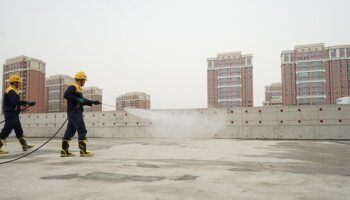

Structural Integrity & Materials Science
Structural Integrity & Materials Science: UHPC, FRP & ROI Materials science is experiencing a revolution…

AI in construction
AI in Construction: Applications, ROI & Real Results The construction industry has historically lagged behind…

Engineering the Sustainable City
Engineering the Sustainable City Cities stand at a crossroads. While occupying just 3% of Earth’s…
Retrofitting Urban Infrastructure
Retrofitting Urban Infrastructure Cities worldwide face a critical challenge: vast portions of their building stock…
Energy Systems for Smart Buildings
Energy Systems for Smart Buildings The term «smart building» has become ubiquitous in commercial real…

The Future of Structural Systems
The Future of Structural Systems: Innovation & Trends The construction industry stands at an inflection…
Arabian Canal Dubai project
Arabian Canal Project in Dubai The Arabian Canal was envisioned as a monumental man-made waterway…

Dubai Industrial City warehouses for lease
Dubai Industrial City warehouses for lease Updated: 27/10/2025 Dubai Industrial Park Dubai Industrial Park (formerly…