
Architectural Innovation Through Modular Design
The construction industry faces mounting pressures: housing shortages in growing cities, rising labor costs, tightening project timelines, and urgent demands for sustainable building practices. Traditional construction methods—assembling buildings piece by piece on site—struggle to address these challenges at the speed and scale required. Modular architecture offers a fundamentally different approach: manufacturing building components or entire modules in controlled factory settings, then transporting and assembling them on site.
Modular design represents far more than simply building in a factory instead of on a construction site. It requires rethinking the entire design and construction process, from how buildings are conceived and engineered to how they’re manufactured, transported, delivered, and assembled. This shift enables construction timelines that can be 40-60% shorter than conventional methods, quality control that surpasses field conditions, and waste reduction that significantly improves sustainability metrics.
Yet modular construction suffers from persistent misconceptions. Many people associate «modular» or «prefab» with the mobile homes and temporary buildings that dominated early applications—structures characterized by limited design flexibility, repetitive aesthetics, and questionable quality. This stigma obscures the reality that contemporary modular architecture encompasses sophisticated systems capable of producing buildings indistinguishable from conventionally constructed structures, from luxury residences to 30+ story towers.
The gap between industry hype and on-ground reality remains substantial. Marketing materials promise 50% time savings, 20% cost reductions, and zero defects. Real-world results are more nuanced. A 120-unit apartment project using volumetric modular construction delivered genuine time savings—14 months versus an estimated 24 months for traditional stick-built construction—but also revealed challenges around logistics coordination, transportation constraints, and the criticality of selecting appropriate project types. Modular construction is a powerful tool that works brilliantly in the right contexts, but forcing it where traditional methods are more appropriate leads to disappointment and wasted resources.
What Is Modular Architecture? Defining the Approach
Modular architecture refers to construction approaches where building components are manufactured off-site in controlled factory environments, then transported to project sites for assembly. This fundamental shift from field construction to factory production enables standardization, quality control, and efficiency improvements difficult to achieve through conventional construction methods.
The approach encompasses a spectrum from simple prefabricated components to complete three-dimensional room modules delivered fully finished with fixtures, finishes, and furnishings installed. What unites these diverse applications is the transfer of construction activities from unpredictable outdoor construction sites to controlled indoor manufacturing facilities where weather doesn’t delay work, materials are systematically organized, and specialized equipment optimizes productivity.
Modular architecture challenges traditional separation between design and construction. Successful modular projects require integrated design-manufacturing-assembly processes where architects, engineers, fabricators, and contractors collaborate from project inception. Design decisions about dimensions, materials, and connections directly impact manufacturing efficiency and assembly sequences. This integration demands different workflows and mindsets than conventional design-bid-build approaches where design completes before construction planning begins.
Prefabrication vs. Modular Construction
The terms «prefabrication» and «modular construction» are often used interchangeably, but they describe related but distinct approaches with different characteristics and applications.
Prefabrication is the broad concept of manufacturing building components off-site. It includes everything from simple elements like roof trusses and window assemblies manufactured in factories then installed in otherwise conventional construction, to sophisticated building systems. Prefabrication has existed for over a century—residential roof trusses, for example, have been factory-built since the mid-20th century.
Modular construction specifically refers to three-dimensional volumetric units—entire rooms or building sections complete with floors, walls, ceilings, and often finishes and systems—manufactured as integrated modules. These modules are largely complete when they leave the factory, requiring only connection to adjacent modules and site utilities during installation. A hotel room module might arrive on site with walls finished, bathroom fixtures installed, flooring complete, and furnishings in place, ready for connection to neighboring modules.
The distinction matters because it affects construction planning, logistics, and economics. Prefabricated components integrate into otherwise conventional construction, offering incremental improvements without fundamentally changing construction processes. Modular construction requires wholesale rethinking of design, delivery, and assembly sequences. The benefits are potentially greater—more dramatic time savings, superior quality control—but so are the coordination demands and risks if things go wrong.
Evolution from Mobile Homes to Sophisticated Systems
Modular construction’s unfortunate association with low-quality mobile homes reflects historical reality but obscures dramatic technological and quality evolution. Early modular applications focused on temporary structures, emergency housing, and low-cost mobile homes where design flexibility and aesthetic quality were secondary to speed and economy.
These early applications established modular construction’s problematic reputation. Mobile homes often featured inexpensive materials, minimal insulation, generic designs, and construction quality inferior to site-built housing. This created lasting perception that «modular» equals «cheap» and «low-quality»—a stigma the industry continues battling despite technological transformation.
Contemporary modular systems bear little resemblance to these predecessors. Modern volumetric modules use materials, finishes, and construction techniques identical to high-quality conventional construction. Advanced engineering enables modules that meet or exceed building code requirements for structural strength, fire safety, acoustic isolation, and energy efficiency. Factory quality control often produces superior results compared to field construction where weather, site conditions, and variable craftsmanship affect outcomes.
Design flexibility has improved dramatically. While early modular construction was limited to simple rectangular forms, contemporary systems accommodate complex geometries, varied facade treatments, and customized interiors. Architects can design modular buildings virtually indistinguishable from conventional construction, eliminating the aesthetic uniformity that characterized earlier applications.
The evolution continues accelerating as sophisticated clients including hotel chains, healthcare systems, and universities adopt modular approaches for projects demanding high quality, rapid delivery, and operational performance. This mainstream acceptance by quality-conscious clients is gradually eroding the stigma inherited from modular construction’s more modest origins.
Types of Modular Building Systems
Modular construction encompasses several distinct system types that vary in how much building assembly occurs in the factory versus on site. Understanding these differences helps match appropriate systems to specific project requirements.
Volumetric Modular (3D Modules)
Volumetric modular construction creates complete three-dimensional room modules in the factory, delivering box-like units that are 70-95% complete when they arrive on site. These modules include structural floors, walls, and ceilings plus electrical, plumbing, HVAC systems, interior finishes, and sometimes furnishings.
A typical hotel room module might measure 12-16 feet wide by 40-60 feet long by 10-12 feet high—dimensions constrained by transportation limits on highways. The module arrives at the construction site as a nearly complete hotel room requiring only connection to adjacent modules, utility hookups, and minor finish work at module joints.
Manufacturing occurs on assembly lines similar to those used in automotive or aircraft production. Modules progress through workstations where different trades install their systems in sequence. Quality control inspectors verify work at each station before modules advance. This systematic approach achieves consistency and efficiency impossible in field conditions.
Installation requires large cranes to lift and position modules, typically completing an entire building floor in days rather than the weeks or months conventional construction requires. A 120-unit apartment building using volumetric modular construction completed in 14 months versus an estimated 24 months for traditional stick-built construction—demonstrating the genuine time savings possible.
The primary constraint is transportation. Modules must fit within road transport limits—typically 16 feet wide by 60 feet long in the United States, though dimensions vary by jurisdiction and transport route. This fundamentally constrains design flexibility, as building layouts must accommodate module dimensions. Creative architecture is possible within these constraints, but they eliminate some design options available with conventional construction.
Panelized Systems (2D Components)
Panelized systems manufacture flat wall, floor, and roof panels in factories, then ship and assemble them on site similarly to conventional framing but with improved precision and efficiency. These two-dimensional components offer middle ground between stick-built construction and volumetric modules.
Wall panels typically arrive with framing, sheathing, windows, and sometimes exterior finishes installed. Electrical conduits and insulation may be incorporated during manufacturing. However, unlike volumetric modules, panels arrive flat and require assembly into three-dimensional building forms on site.
Panelized construction achieves many benefits of factory production including quality control, material efficiency, and weather independence during manufacturing, while avoiding transportation constraints that limit volumetric modules. Flat panels ship more efficiently than three-dimensional modules, allowing longer spans and fewer shipping loads for equivalent building area.
However, panelized systems require more on-site labor than volumetric modules since assembly creates the three-dimensional building rather than simply connecting pre-formed rooms. Installation speed falls between conventional stick-building and volumetric modular approaches. Weather during installation affects panelized construction more than volumetric since the building envelope isn’t complete when panels arrive.
Panelized systems suit projects where transportation constraints make volumetric modules impractical but factory production benefits remain desirable. They’re particularly common in residential construction where site access, design flexibility, and cost sensitivity make them attractive alternatives to both conventional framing and volumetric modules.
Hybrid Modular Approaches
Increasingly, projects combine different modular strategies to optimize specific building requirements. Hybrid approaches might use volumetric modules for repetitive spaces like hotel rooms or apartments while using panelized or conventional construction for unique areas including lobbies, amenity spaces, or complex geometries.
This flexibility allows designers to apply modular methods where they deliver maximum value while using conventional techniques where modular constraints would compromise design intent or prove uneconomical. A hotel might use volumetric modules for hundreds of identical guest rooms—where repetition creates economies of scale—while building the lobby, restaurant, and conference facilities conventionally where customization matters more than construction speed.
Hybrid approaches can also combine different materials and structural systems. Modules might use light-gauge steel or timber framing while cores and podiums use concrete. This material optimization leverages each material’s strengths while working within modular manufacturing and transportation constraints.
The coordination demands of hybrid approaches exceed single-system construction. Interfaces between modular and conventional construction require careful detailing to ensure structural continuity, weather-tightness, and aesthetic consistency. However, the flexibility to select optimal approaches for different building elements often justifies the additional coordination effort.
Benefits of Modular Design
The case for modular construction rests on multiple quantifiable benefits that, when project conditions align favorably, deliver substantial value compared to conventional approaches.
Construction Speed: Time Savings
Time savings represent modular construction’s most compelling benefit. Manufacturing buildings or building components while simultaneously preparing sites and foundations enables parallel workflows impossible with sequential conventional construction.
Traditional construction follows linear sequences: foundation completion must precede structural framing, which must precede enclosure, which must precede interior finishes. Each phase waits for its predecessor to complete. Modular construction overlaps phases—modules are manufactured while foundations are being built, arriving on site ready for installation immediately after foundation completion.
Real-world projects demonstrate substantial time compression. The 120-unit apartment building completed in 14 months using volumetric modules versus 24 months estimated for conventional construction—a 42% reduction. High-rise modular towers report completing 1-2 floors per week versus 1-2 floors per month with conventional concrete construction.
These time savings deliver multiple values. Earlier building occupancy generates revenue sooner, improving project returns. Reduced construction duration means fewer months of construction financing costs. Faster completion reduces exposure to price escalation for labor and materials. In markets with housing shortages or rapidly growing demand, speed to market provides competitive advantage that can justify modular’s cost premium if one exists.
However, time savings aren’t guaranteed. They depend on perfect coordination between factory manufacturing, site preparation, and module delivery. Delays in permits or foundation work can result in completed modules sitting in factory storage, accumulating costs. One project experienced $200,000 in extra costs from storage and delivery rescheduling when permit delays prevented timely foundation completion. When coordination fails, modular’s time advantages evaporate and may even reverse.
Quality Control in Factory Conditions
Factory manufacturing environments deliver quality advantages difficult to achieve in field conditions. Indoor manufacturing eliminates weather impacts on materials and workmanship. Rain doesn’t wet framing lumber, snow doesn’t delay concrete curing, and wind doesn’t prevent crane operations. Work proceeds consistently regardless of weather conditions.
Systematic workflows with specialized workstations and equipment optimize each construction task. Workers repeat the same operations on sequential modules, developing expertise and efficiency impossible when each building task occurs only once or a few times. Quality control inspectors verify work at each station before modules progress, catching defects when they’re easiest to correct rather than discovering them after completion.
Material storage and handling are more controlled than construction sites. Materials remain dry and organized rather than exposed to weather and potential damage. Specialized equipment moves heavy items safely and precisely. This controlled environment reduces material waste and damage while improving worker safety.
That said, quality depends entirely on the fabricator. Unlike conventional construction where the general contractor directly manages subcontractors, modular construction places complete manufacturing responsibility with the module fabricator. Weekly factory visits on the 120-unit apartment project identified connection issues between modules that could have been disastrous if not caught and corrected. Without vigilant oversight, quality problems can go undetected until modules arrive on site where corrections are far more difficult and expensive.
Waste Reduction and Sustainability
Construction waste represents a substantial environmental problem—the industry generates approximately 600 million tons of debris annually in the United States alone. Modular construction reduces waste through material optimization and controlled manufacturing.
Factory settings enable precise material cutting and efficient use of remnants difficult to achieve on construction sites. Computer-controlled cutting equipment minimizes waste from dimensional lumber, sheet goods, and other materials. Scrap materials from one module can be used in subsequent modules rather than discarded. Leftover materials stay in the factory for future projects rather than being thrown in dumpsters.
Packaging and delivery are more efficient. Materials arrive at factories in bulk rather than in small lots delivered to construction sites. This reduces packaging waste and transportation emissions from multiple delivery trucks. On-site waste primarily consists of module connection materials and finish work—a fraction of conventional construction waste.
However, transportation of completed modules must be considered in sustainability assessments. Shipping large modules long distances can generate substantial emissions that offset some waste reduction benefits. Projects should evaluate whether the nearest suitable module factory is close enough that transportation impacts don’t negate manufacturing efficiencies.
Cost Predictability
Construction cost overruns plague the industry. Projects routinely exceed budgets due to design changes, unforeseen site conditions, weather delays, material price escalation, and coordination failures. Modular construction’s factory manufacturing provides cost predictability advantages though not necessarily lower absolute costs.
Fixed-price contracts with module manufacturers transfer pricing risk from owners to fabricators. The manufacturer commits to delivering modules at agreed prices, absorbing risks from labor shortages, material price increases, and manufacturing inefficiencies. This predictability helps owners and lenders model project economics more confidently than conventional construction where costs remain uncertain until completion.
Shorter construction schedules reduce certain costs even if per-square-foot construction costs match or slightly exceed conventional methods. Reduced financing duration, fewer months of site overhead costs, and earlier revenue generation can make modular economically attractive even with higher direct construction costs.
However, cost advantages aren’t automatic. Modular construction requires substantial upfront investment in detailed design and engineering before manufacturing begins. Design changes during manufacturing are extremely expensive or impossible, unlike conventional construction where adjustments occur more flexibly. Projects must amortize design and tooling costs across enough units to achieve favorable economics—one reason modular works brilliantly for repetitive projects like hotels but struggles with custom high-end residential where clients expect design flexibility and changes during construction.
Modular Design and Sustainability
Beyond waste reduction, modular construction offers sustainability benefits across manufacturing, materials, and building lifecycle while supporting circular economy principles that emphasize reuse over disposal.
Material Efficiency and Waste Minimization
Material optimization in factory settings extends beyond reduced waste to include more efficient structural design. Controlled manufacturing enables precise fabrication tolerances difficult to achieve in field construction, allowing engineers to design with smaller safety factors and less material redundancy.
Factories can use advanced materials and techniques uneconomical for one-off site construction. Engineered wood products, high-strength steel, and optimized connection systems that require specialized equipment become cost-effective when producing multiple identical modules. This material efficiency reduces embodied carbon and resource consumption compared to conventional construction using standard materials with conservative sizing.
Waste streams in factories can be systematically managed. Wood waste becomes fuel for heating, metal scraps return to recycling, and packaging materials are reused. This systematic waste management is more effective than on construction sites where waste disposal relies on contractors’ variable commitment to recycling and separation.
Energy Efficiency in Manufacturing
Consolidated manufacturing in factories uses energy more efficiently than dispersed construction sites. A single facility’s heating, lighting, and equipment serve multiple projects simultaneously, sharing overhead across production volume. Manufacturing equipment operates near optimal capacity, maximizing energy efficiency per unit produced.
Factory buildings themselves typically exceed energy codes for commercial structures, with efficient heating, natural daylighting, and modern equipment reducing energy consumption per square foot of manufactured building module. In contrast, construction sites use temporary heating, portable generators, and equipment that operates inefficiently in outdoor conditions.
Transportation energy must be considered in the full sustainability equation. The uncomfortable truth about modular sustainability is that logistics can negate benefits. Shipping completed modules hundreds of miles can generate emissions exceeding the energy efficiency gains from factory manufacturing. Project-specific life cycle assessments should evaluate whether the closest suitable factory is near enough that transportation impacts don’t overwhelm manufacturing benefits.
Disassembly and Circular Economy
Modular construction aligns naturally with circular economy principles emphasizing product reuse, component recovery, and material recycling over linear extract-manufacture-dispose patterns. Modules designed for disassembly can be disconnected from their original buildings and relocated to new sites, extending material life and avoiding demolition waste.
The future that excites many professionals involves modular-as-a-service models where buildings are leased rather than sold, with owners retaining modules that can be reconfigured, relocated, or upgraded. Several startups in Europe are exploring these models. This creates incentives for durable design and maintains module ownership with parties having long-term interest in their continued use.
Modules can evolve over building lifetimes. Outdated mechanical systems, worn finishes, or obsolete layouts can be updated by replacing or refurbishing individual modules while the rest of the building remains operational. This incremental upgrading contrasts with conventional construction where major renovations disrupt entire buildings.
However, achieving these circular economy benefits requires intentional design for disassembly including accessible connections, standardized interfaces, material labeling, and documentation. Without this upfront planning, modules are as difficult to disconnect and reuse as conventionally constructed buildings. The vision of circular modular construction remains largely aspirational pending industry adoption of design-for-disassembly standards.
Technological Enablers of Modular Innovation
Recent technological advances have dramatically improved modular construction’s capabilities, enabling applications previously impractical or impossible while addressing traditional limitations.
BIM and Digital Fabrication
Building Information Modeling has become essential for modular construction, enabling the precise coordination and digital fabrication that efficient modular manufacturing requires. BIM creates three-dimensional digital models containing complete building geometry, material specifications, and system routing that can be directly converted into fabrication instructions.
This digital workflow eliminates traditional drawing interpretation errors. Manufacturing equipment reads directly from BIM models, cutting materials to exact dimensions and drilling holes at precise locations without manual measurement and layout. This digital precision enables tolerances impossible with conventional construction where accumulating small errors cause fit-up problems.
Clash detection in BIM identifies conflicts between building systems—where ductwork intersects structural beams, or pipes interfere with electrical conduits—before manufacturing begins. Resolving these conflicts digitally costs hours of engineering time. Discovering them during manufacturing or installation costs days or weeks and substantial money. BIM’s ability to virtually build and test buildings before physical construction begins is particularly valuable for modular where fixes are difficult once manufacturing starts.
The digital models also facilitate factory automation. Computer-controlled equipment can cut, drill, weld, and assemble components with precision and repeatability far exceeding manual craftsmanship. As factories invest in more sophisticated automation, the quality and efficiency advantages of modular manufacturing will continue expanding.
Automation and Robotics
Factory automation is transforming modular manufacturing from craft-based processes to industrialized production. Robotic welding produces consistently high-quality structural connections. Automated cutting systems precisely dimension materials with minimal waste. Conveyance systems move modules through workstations without manual handling.
These automation investments require production volume to justify costs—another reason modular economics favor repetitive projects where tooling and programming costs amortize across many identical modules. A custom residential project can’t justify automation investment that a 200-room hotel with identical modules makes economically sensible.
Current automation focuses on repetitive tasks amenable to robotic execution—cutting, welding, material handling. More complex tasks including finish installation, quality inspection, and problem-solving remain manual. Future automation will likely address these areas, but human craftsmanship and judgment remain essential for now.
The trend toward automation has workforce implications. Factory jobs require different skills than traditional construction trades—more emphasis on machine operation, programming, and quality control than manual installation skills. This shift may eventually address construction labor shortages by making manufacturing jobs more attractive to workers seeking indoor employment with regular schedules rather than outdoor construction work.
Standardization vs. Customization
Modular construction creates tension between standardization that enables efficiency and customization that satisfies diverse client needs and site conditions. Early modular systems prioritized standardization, producing buildings with repetitive, generic designs that contributed to the industry’s low-quality perception.
Contemporary approaches increasingly balance standardization and customization by standardizing manufacturing processes and connection systems while allowing variation in materials, finishes, and configurations. A hotel chain might use standard module dimensions and structural systems across properties while varying interior finishes and facade treatments to suit local markets and brand positioning.
Mass customization—using flexible manufacturing systems to produce varied products efficiently—represents modular construction’s future direction. The same factory can produce modules with different dimensions, layouts, and finishes by reprogramming equipment and adjusting workflows rather than building entirely new production lines. This flexibility makes modular viable for projects requiring variety while maintaining manufacturing efficiency.
Digital design tools enable customization within systematic constraints. Parametric design allows architects to vary building dimensions, layouts, and details while maintaining compliance with modular manufacturing and transportation requirements. This creates design freedom within defined boundaries rather than the unlimited flexibility of conventional construction or the rigid standardization of early modular systems.
Challenges in Modular Architecture
Professional experience reveals that modular construction faces substantial challenges that marketing materials often minimize or ignore. Understanding these limitations helps determine when modular approaches are appropriate versus when conventional methods prove superior.
Transportation and Logistics Constraints
Transportation logistics represent modular construction’s most fundamental constraint and biggest practical challenge. Modules must travel from factory to site via road, rail, or ship, limiting dimensions to what transportation infrastructure accommodates.
Highway transport typically limits widths to 16 feet and lengths to 60-70 feet depending on jurisdiction and route. Taller modules face overhead clearance restrictions from bridges and power lines. These constraints fundamentally impact building design—room dimensions, corridor widths, and building depths must work within transportation limits. Creative architecture is possible, but some design options available with conventional construction simply aren’t feasible with modular.
Professional experience managing the 120-unit apartment project emphasizes that logistics coordination is brutal. Manufacturing must align perfectly with site preparation. Foundation delays mean completed modules sit in factory storage accumulating costs. The project incurred $200,000 in extra costs from storage and delivery rescheduling when permit delays prevented timely foundation work.
Transport routes must be planned carefully, sometimes requiring police escorts, road closures, or removal of obstacles like traffic signals. Some urban sites are simply inaccessible to module delivery trucks and cranes needed for installation. Site access assessment should occur during project feasibility evaluation, not after committing to modular construction.
Modules must arrive in proper sequence for installation—unlike conventional construction where materials can be stockpiled on site, large modules must be installed immediately upon arrival. This just-in-time delivery requires precise scheduling and assumes no unexpected delays. When things go wrong, consequences cascade quickly.
Building Code and Zoning Barriers
Building codes and zoning regulations written assuming conventional construction often create barriers for modular approaches. Codes may not explicitly address modular construction, requiring officials to interpret requirements written for site-built construction. This interpretative process can create delays, inconsistent application, and requirements that negate modular advantages.
Some jurisdictions require inspections at stages that don’t align with factory manufacturing. Codes might mandate foundation inspection before wall construction, but modular walls are built before foundation completion. Resolving these timing conflicts requires coordination with building officials, third-party inspection agencies, and potentially code variance approvals.
Zoning regulations may inadvertently discriminate against modular construction. Some jurisdictions prohibit or restrict «manufactured housing»—definitions that may or may not include modern modular construction depending on interpretation. Fighting these regulatory barriers consumes time and resources, particularly for developers pioneering modular in jurisdictions without established precedent.
The industry is working to address these code barriers through model code development and education of building officials. However, progress is uneven, with some jurisdictions embracing modular while others maintain outdated restrictions. Project teams must assess regulatory environment early and engage building officials to avoid late-stage obstacles.
Design Limitations and Aesthetic Perceptions
Despite technological advances, modular construction faces design constraints that don’t affect conventional construction. Transportation limits impose dimensional restrictions. Module connections create visual and technical challenges at joints. Repetition inherent in module manufacturing produces buildings with regular, often rectilinear geometries.
These constraints don’t prevent good design—talented architects create compelling modular buildings—but they require different design thinking than conventional construction. Architects must understand manufacturing and transportation constraints from the start rather than designing freely then attempting to adapt designs to modular production.
The aesthetic perception challenge persists despite improved reality. Modular buildings that are indistinguishable from conventional construction when photographed still face skepticism from clients, lenders, and public who associate «modular» with mobile homes and temporary buildings. Overcoming this perception requires education, marketing, and accumulating successful examples that demonstrate contemporary modular’s capabilities.
High-end custom residential represents modular’s worst use case. Clients expect design flexibility and commonly request changes during construction. Modular doesn’t tolerate this—commitments must be locked in early, and changes during manufacturing are extremely expensive or impossible. For clients valuing customization and design evolution, conventional construction better serves their needs despite longer timelines.
Site Connection and Foundation Complexity
While modular construction moves most work off-site, critical site work remains including foundations, utilities, and module connections. These elements require the same precision and quality as the factory-built modules, and failures here can negate manufacturing advantages.
Foundations must achieve extremely tight tolerances—typically within 1/4 inch—to accommodate module connections. Conventional construction tolerates greater foundation variation because walls and structure adjust during construction. Modular’s prefabricated modules can’t accommodate significant misalignment, so foundation precision becomes critical and potentially more expensive than conventional foundation work.
Utility connections between modules and from modules to site systems require careful coordination. Mechanical, electrical, and plumbing systems designed to connect at specific locations must align precisely. Misalignment discovered during installation requires expensive field modifications to systems designed and built expecting perfect alignment.
Module-to-module connections create technical challenges. Structural connections must transfer loads between modules while accommodating transportation-induced stresses and installation tolerances. Weather sealing at module joints prevents water infiltration—a particular challenge where precision-built factory modules meet imperfect site conditions. Acoustic isolation between modules requires attention to connection details that could transmit sound if poorly executed.
Modular Architecture for Different Building Types
Modular construction suits some building types far better than others. Understanding these alignments helps identify appropriate applications versus projects where conventional methods prove superior.
Residential: Multi-Family Housing
Multi-family residential buildings—apartments, condominiums, and affordable housing—represent modular construction’s largest and most successful market. The repetitive nature of residential units, relatively simple building systems, and construction speed benefits create favorable conditions for modular approaches.
Apartment buildings with many similar units amortize design and tooling costs across numerous identical or near-identical modules. A 120-unit building can justify customized engineering and manufacturing setup that wouldn’t be economical for a 10-unit building. This scale economy is why modular residential tends to target mid-size and larger projects rather than small buildings.
Construction speed delivers particular value for affordable housing where funding often requires rapid deployment and where earlier occupancy serves urgent social needs. Time savings from modular can mean housing homeless populations months sooner than conventional construction allows.
However, residential markets remain challenging for modular. Local contractors, lenders, and buyers often unfamiliar with modular construction resist unfamiliar approaches. Perceived stigma around modular quality affects marketability, potentially requiring price discounts that eliminate economic advantages. Successful residential modular requires not just technical execution but market education and positioning.
Hospitality: Hotels and Student Housing
Hotels and student housing represent modular construction’s sweet spot—highly repetitive room modules with standardized layouts, finishes, and equipment. The economies of scale that make modular economically attractive reach their fullest expression in these building types.
CitizenM hotels exemplify genius modular application—using the same basic module design across 50+ locations worldwide. This extreme repetition amortizes design engineering, manufacturing tooling, and quality optimization across hundreds of nearly identical rooms. The company achieves reliability, cost efficiency, and construction speed that would be impossible with conventional construction.
Hotel development’s compressed schedules align perfectly with modular’s time advantages. Opening hotels during high season rather than off-season generates revenue that can exceed any cost premium from modular construction. This makes speed-to-market more valuable than minimizing construction costs.
Student housing faces similar dynamics—need for repetitive compact rooms, compressed construction schedules to ready buildings for fall semester occupancy, and increasingly sophisticated quality expectations that factory manufacturing can deliver. Many universities have successfully used modular student housing to quickly add capacity while maintaining quality standards.
Healthcare: Modular Medical Facilities
Healthcare facilities including hospitals, clinics, and medical office buildings increasingly use modular construction for specialized spaces like patient rooms, examination rooms, and operating suites where layouts repeat and standardization improves both construction efficiency and operational quality.
Patient room modules arrive with medical gas connections, nurse call systems, headwalls, and finishes installed—ready for immediate service once connected. This factory installation of specialized medical systems under controlled conditions often produces superior quality compared to field installation in active hospital environments.
Modular construction minimizes construction impacts on operating medical facilities—critical when adding capacity to existing hospitals that must maintain operations during construction. Faster construction reduces disruption duration, and factory-completed modules mean less on-site trade work generating noise, odors, and traffic through medical areas.
However, healthcare projects face stringent regulatory requirements, specialized engineering demands, and complex integration with existing facilities that can complicate modular applications. Successful healthcare modular requires specialized expertise and close coordination with medical equipment vendors and clinical staff who will occupy the spaces.
Commercial: Office Buildings
Commercial office buildings increasingly use modular construction, particularly for repetitive floor plates in mid-rise towers where module manufacturing and installation deliver time-to-market advantages valuable in competitive rental markets.
Office modular often uses hybrid approaches—modular floor systems with conventional cores housing elevators, stairs, and mechanical systems. This combines modular’s speed advantages for repetitive floors with conventional construction’s flexibility for unique core elements and ground-floor retail or amenity spaces.
Tenant flexibility requirements in commercial office buildings can challenge modular approaches since layouts may change to accommodate different tenants with varying space needs. This suggests modular office buildings should emphasize demountable interior partitions and flexible systems rather than highly customized tenant fit-outs integrated into module manufacturing.
Case Studies: Pioneering Modular Projects
Examining landmark modular projects demonstrates the approach’s evolution and growing sophistication while illustrating both possibilities and remaining challenges.
Apex House, New York (32-story modular tower)
Apex House, a 32-story residential tower in New York City completed in recent years, demonstrates that modular construction can achieve heights previously associated only with conventional concrete construction. The building’s 930 modules were manufactured in a Brooklyn Navy Yard factory and installed at a rate of approximately 20 modules per week.
The project showcases volumetric modular’s time advantages at urban high-rise scale. Installation of the modular superstructure required significantly less time than conventional concrete construction would have needed. This construction speed in expensive urban markets translates to reduced financing costs and earlier revenue generation that justify potential construction cost premiums.
However, the project also revealed challenges. Module manufacturing quality control required constant vigilance. Transportation through dense urban environments to the construction site presented logistical complications. Module connections and building envelope sealing at the urban tower scale demanded engineering sophistication beyond smaller modular projects.
Apex House represents an important proof of concept that modular construction isn’t limited to low-rise buildings. However, it’s important to note that high-rise modular remains a specialized niche requiring sophisticated engineering, experienced manufacturers, and projects where time advantages justify the complexity and potential cost premiums.
CitizenM Hotels: Scalable Hospitality
CitizenM hotels represent perhaps the most successful modular construction application at scale, using standardized room modules across dozens of properties worldwide. The company developed a module design optimized for manufacturing efficiency, installation simplicity, and operational performance, then replicated it systematically across their portfolio.
This approach perfectly demonstrates modular construction’s best use case: repetitive projects where design and tooling investment amortizes across many identical units. By using essentially the same module design in 50+ locations, CitizenM achieved economies of scale impossible for one-off projects. The company refined manufacturing processes, optimized quality control, and reduced costs through continuous improvement over many projects.
Each hotel installation benefits from accumulated learning—manufacturing becomes more efficient, installation faster and smoother, and quality more consistent. This systematic replication allows the company to open new properties quickly, maintain brand consistency, and achieve construction costs that would be difficult to match with conventional construction.
The CitizenM example suggests a future direction for modular construction: platform approaches where standardized module designs serve as bases for multiple projects with variation in exterior finishes, branding, and site-specific elements while maintaining core module standardization.
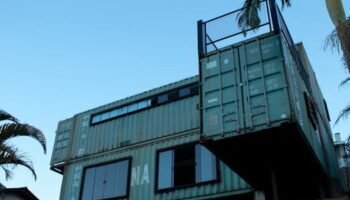
Shipping Container Architecture: Adaptability
Shipping container architecture represents a specialized modular approach that has captured public imagination despite limited practical applications. Repurposing standard shipping containers as building modules offers dimensional standardization, worldwide availability, inherent structural strength, and low material costs.
Container architecture appeals through aesthetic distinctiveness, sustainability narrative around material reuse, and perceived cost advantages. Numerous small projects—temporary installations, disaster relief housing, and demonstration projects—have used containers creatively to generate media attention and explore design possibilities.
However, container architecture faces practical limitations that prevent mainstream adoption. Standard containers are 8 feet wide—too narrow for most building programs without joining multiple containers. Interior ceiling heights are only 8 feet, less than optimal for habitable spaces. Cutting openings for windows and doors compromises structural integrity requiring reinforcement. Insulation and interior finishing often cost as much as the containers themselves.
Most importantly, containers aren’t actually inexpensive building systems when modifications, insulation, systems installation, and foundation requirements are included. New-build modular construction often costs less than container conversion while delivering superior thermal performance, ceiling heights, and design flexibility.
Container architecture demonstrates modular construction’s design possibilities but isn’t necessarily a practical mainstream solution despite its popularity in architectural media.
Economic Analysis: Cost Comparison with Traditional Construction
Understanding modular construction economics requires examining multiple cost factors beyond simple per-square-foot construction costs. The analysis varies substantially by project type, location, and specific circumstances.
Typical claims suggest modular construction costs 10-20% less than conventional construction, but real-world experience shows more nuanced reality. For some projects, modular construction costs slightly more on a per-square-foot basis but delivers value through time savings. Other projects achieve genuine cost reductions through manufacturing efficiency and waste minimization.
Cost factors favoring modular include reduced construction duration (lower financing costs), minimized weather delays, reduced site supervision requirements, and lower waste disposal costs. Factory efficiency, bulk material purchasing, and systematic workflows can reduce labor hours per square foot compared to field construction.
Cost factors disadvantaging modular include transportation expenses, crane costs for module installation, engineering and design expenses for specialized modular detailing, and potentially higher factory labor rates compared to field construction labor in some markets. The need for precise foundations and specialized connection details can increase site work costs.
The economic calculus depends heavily on project type. For highly repetitive projects like hotels, cost advantages are most likely. The CitizenM hotel model demonstrates that extreme standardization across many projects creates genuine cost advantages. For custom residential where clients want flexibility, modular may cost more than conventional construction without delivering offsetting benefits.
Market conditions affect competitiveness. In markets with labor shortages or high wage rates, factory manufacturing becomes more economically attractive. In markets with abundant low-cost construction labor, conventional construction’s lower barrier to entry makes it harder for modular to compete on price alone.
Financing and appraisal issues can affect project economics independent of construction costs. Some lenders remain unfamiliar with modular construction or hesitant to finance it, potentially requiring higher down payments or interest rates. Appraisers may struggle to value modular buildings if comparable sales are limited, potentially affecting financing approval or required equity contributions.
The honest assessment: modular construction is a tool, not a panacea. It works brilliantly in correct contexts but shouldn’t be forced where traditional methods are more appropriate. Projects should evaluate whether their specific circumstances—building type, repetition, schedule requirements, site conditions, and market context—align with modular construction’s strengths or play to its limitations.
Future of Modular Design: Trends and Predictions
Several emerging trends suggest how modular construction will evolve over coming years, addressing current limitations while expanding capabilities and applications.
Mass Customization
The tension between standardization (which enables efficiency) and customization (which satisfies diverse needs) is being addressed through mass customization—using flexible manufacturing systems and digital design tools to produce varied products efficiently.
Parametric design tools allow architects to generate designs within systematic constraints that ensure manufacturability. Clients can select from options that vary layouts, finishes, and features while maintaining underlying module dimensions and systems that factory equipment can produce efficiently. This creates meaningful customization without the complete bespoke design that makes modular economically unviable.
Factory equipment is becoming more flexible, capable of producing varied module configurations without extensive retooling. Computer-controlled cutting and assembly systems can be reprogrammed for different dimensions and details rather than requiring dedicated tooling for each module type. This flexibility reduces the scale necessary for economic viability.
The future likely involves configurable module systems where clients select from libraries of tested, code-approved module types that can be combined in various configurations to create diverse buildings from standardized components. This approach balances variety with the efficiency advantages of proven, repeatable modules.
3D-Printed Modules
Three-dimensional printing technology applied to building construction could address one of modular’s primary limitations: transportation constraints. Rather than printing entire buildings on-site—which eliminates modular’s factory quality control advantages—future applications may print modules on-site, combining factory-like systematic production with elimination of transportation limits.
Mobile 3D printing equipment could move between project sites, printing concrete or composite material modules in dimensions unconstrained by highway limits. This technology could produce larger, more complex forms than traditional modular manufacturing while maintaining the systematization and quality control that make factory production attractive.
Current 3D printing construction remains slow compared to conventional construction and limited in materials and structural capabilities. However, rapid technological development suggests these limitations will diminish. Several startups are exploring 3D printing of concrete modules on-site, which could eliminate transportation constraints while maintaining modular’s systematic approach.
The technology particularly intrigues professionals because it could combine modular construction’s benefits—systematic production, quality control, reduced waste—with elimination of the brutal logistics coordination that currently challenges modular projects.
Modular Retrofits for Existing Buildings
Future applications may extend beyond new construction to retrofitting existing buildings with modular components. Modular bathroom pods, mechanical systems, or facade panels manufactured in factories and installed in existing buildings could accelerate renovation projects while maintaining building occupancy.
This approach could address the massive existing building stock requiring renovation for energy efficiency, accessibility compliance, or functional obsolescence. Traditional renovation disrupts occupants and takes months or years. Modular retrofit systems could shorten disruption while delivering superior quality through factory manufacturing.
Building envelope retrofits using prefabricated facade panels with integrated insulation, windows, and weatherproofing could dramatically improve energy performance in existing buildings. These panels attach to existing structures, upgrading thermal performance and aesthetics simultaneously. Manufacturing panels to precise dimensions for existing buildings requires accurate field measurement and digital modeling but avoids modular new construction’s foundation precision demands.
Getting Started with Modular Design: Practical Guide
For architects, developers, and building owners considering modular construction, systematic evaluation determines whether the approach suits specific project requirements and circumstances.
Assess project suitability: Modular works best for repetitive building types (hotels, student housing, multi-family residential) with many similar spaces. Projects requiring extensive customization or featuring unique spaces throughout aren’t good candidates. Projects with tight schedules benefit most from modular’s time advantages. Those with flexible timelines may not need to pay any cost premium modular might impose.
Evaluate site conditions: Assess whether the site can accommodate large crane operations and module delivery trucks. Urban sites with restricted access or congested surroundings may not work. Verify that transportation routes from potential factories to site can handle module dimensions without prohibitive costs or delays. Poor site accessibility can eliminate modular’s viability regardless of other factors.
Identify appropriate factories: Research module manufacturers with relevant experience and capabilities. Visit factories to assess quality control, manufacturing capabilities, and capacity to handle your project schedule. Closer factories reduce transportation costs and logistics complexity—always prefer nearer facilities if capabilities are comparable.
Engage early: Begin modular evaluation during project feasibility, not after design is substantially complete. Modular requires integrated design-manufacturing thinking from the start. Attempting to convert conventional designs to modular manufacturing late in the process rarely succeeds and often proves more expensive than simply continuing with conventional construction.
Design with constraints in mind: Work within transportation limits, standardize where possible while customizing strategically, and detail module connections carefully. Design for manufacturing and installation logistics, not just architectural intent. The constraints aren’t creative limitations but parameters requiring thoughtful design responses.
Plan for perfect coordination: Modular demands precise coordination between factory manufacturing, site preparation, and module delivery. Small delays cascade into expensive problems. Build schedule contingencies, maintain constant communication between all parties, and have backup plans for likely disruptions including permit delays and weather impacts on foundation work.
Educate stakeholders: Building officials, lenders, contractors, and end users may be unfamiliar with modular construction. Budget time for education, building confidence, and addressing concerns. First-time modular users should consider hiring experienced consultants who can guide the process and help avoid expensive mistakes.
Lock in design early but plan for small adjustments: Modular doesn’t tolerate major design changes during manufacturing, but some flexibility for minor adjustments should be built into schedules and budgets. The earlier design is finalized, the less expensive any modifications become.
Monitor manufacturing closely: Don’t assume factory manufacturing guarantees quality. Regular factory visits, quality audits, and verification that modules meet specifications are essential. Catching problems during manufacturing costs far less than discovering them during site installation.
Modular construction is a powerful tool that works brilliantly in correct contexts—highly repetitive projects, tight schedules, controlled building types. It struggles with custom designs, design flexibility during construction, and sites with access challenges. The key is honest assessment whether your specific project aligns with modular’s strengths or runs into its limitations.
FAQs
How much cheaper is modular construction than traditional building?
Claims of 10-20% cost savings are common but often don’t materialize in practice. Real-world experience shows modular sometimes costs slightly more per square foot than conventional construction while delivering value through 40-60% faster completion. Time savings reduce financing costs and enable earlier revenue generation that can offset higher construction costs. Projects with high repetition (hotels, multi-family) achieve best cost performance. Custom projects may cost more than conventional construction without offsetting benefits.
Can modular buildings be customized or are they all the same?
Modern modular construction offers substantial customization within systematic constraints. While early modular was highly standardized, contemporary approaches allow varied layouts, finishes, materials, and configurations. Mass customization techniques enable clients to select options that create distinctive buildings from standardized components. However, modular doesn’t accommodate the unlimited flexibility or mid-construction changes that conventional construction tolerates. Design must lock in earlier than traditional projects.
Are modular buildings as strong and durable as traditional construction?
Yes. Modular buildings must meet identical building codes and structural requirements as conventional construction. Factory quality control often produces superior construction quality compared to field-built structures. Modular buildings perform well in hurricanes, earthquakes, and other extreme conditions when properly engineered. The transportation and installation process actually subjects modules to stresses beyond normal building loads, requiring robust construction that typically exceeds minimum code requirements.
How long does modular construction take compared to traditional methods?
Modular construction typically reduces schedules by 40-60% compared to conventional construction. A project requiring 24 months traditionally might complete in 14 months with modular. Time savings result from parallel activities—manufacturing modules while preparing foundations—and faster installation of completed modules versus sequential field construction. However, time advantages depend on perfect coordination. Delays in permits or foundations can eliminate schedule benefits if completed modules sit in storage waiting for sites.
What are the transportation limits for modular buildings?
Highway transport typically limits module width to 16 feet, length to 60-70 feet, and height to 12-14 feet depending on jurisdiction and route. These constraints fundamentally affect building design—all dimensions must work within transportation limits. Creative architecture is possible within constraints, but some design options available with conventional construction aren’t feasible. Transportation route planning including bridge clearances, overhead obstacles, and turning radii must occur early in project planning.
Do building codes restrict modular construction?
Building codes generally apply the same requirements to modular and conventional construction, though enforcement can vary. Some jurisdictions have specific modular construction provisions while others interpret conventional code requirements for modular applications. Timing of inspections may need adjustment since factory manufacturing doesn’t follow traditional construction sequences. Engaging building officials early helps navigate requirements and avoid late obstacles. Progressive jurisdictions embrace modular while others maintain outdated restrictions.
Considering modular construction for your project? Share your building type, unit count, schedule requirements, site conditions, and level of design customization needed for specific guidance on whether modular approaches suit your circumstances or whether conventional construction better serves your requirements.
Currently viewing
Modular Architecture Innovation Design
Burj Azizi: Dubai’s Second-Tallest Building
Dubai continues to push the boundaries of architectural innovation with the Burj Azizi, a skyscraper…

Choosing Structural Materials
Timber, Steel, and Concrete: Choosing the Right Structural Language Every building begins with a fundamental…

Green Facades & Sustainable Materials
Green Facades & Sustainable Materials: The Future of Urban Skins Buildings shape the visual and…

Adaptive Reuse
Adaptive Reuse: How Old Buildings Shape Modern Urban Life Cities are living archives. Every structure…

The Rise of Smart Architecture
The Rise of Smart Architecture: Designing the Intelligent City [2025] The architectural landscape is undergoing…

Time Residences in Dubai to be ‘Green’
Time Residences in Dubai to be ‘Green’ Updated: 27/10/2025 When Dubai announced Time Residences in…